
Architectural Shingle Nailing Pattern
Architectural Shingle Nailing Pattern - Web when embarking on a roofing project, selecting the right type of nails is crucial. Web start at the bottom. Secure each shingle with roofing nails at the top edge of the tile. Do not place fasteners on or above the paint line of the shingle. This guide provides an extensive overview of roofing nails for shingles, ensuring you. This strip should be 1.25 inches wide. Web install it with 6 inches of clearance at the bottom. Begin at the lower left corner of your roof, laying your first row of shingles. Place the next row of shingles directly on top of the first, making it two tiles thick. This row should peek over the eaves by about a half inch (1.3 centimeters). Web installing architectural shingles is not a difficult process, but it does require the correct tools and an understanding of the process. Do not place fasteners on or above the paint line of the shingle. The purpose of this sample board is to show the proper nail position for three tab shingles. This chapter will demonstrate how to properly nail roofing shingles. Web when embarking on a roofing project, selecting the right type of nails is crucial. Web roof shingle fastening patterns affect the roof's wind performance and roof leakage. When installing thicker shingles, you may need to use a longer nail in order to penetrate the osb beneath fully. For these shingles, roofers typically use six nails per shingle. Web one of the key components to shingle performance, regardless of manufacturer, is proper nailing. This strip should be 1.25 inches wide. Place the next row of shingles directly on top of the first, making it two tiles thick. Begin at the lower left corner of your roof, laying your first row of shingles. Do not place fasteners on or above the paint line of the shingle. Typically, use four nails per shingle, placing them about 1 inch above the cutouts and. Install it by driving nails into place near the top edge, and make sure the board is at a slight angle. This chapter will demonstrate how to properly nail roofing shingles. Offset the joints of adjacent shingles in a staggered pattern to provide better protection against leaks. Secure each shingle with roofing nails at the top edge of the tile.. Install the recommended number of nails per shingle. In most cases, 4 nails are adequate. Web here’s the best way to install roof shingles, where to nail shingles, how much to overhang the drip edge, and fit the felt paper. Web a large nailing area can make shingles easier and quicker to install while also increasing nail placement accuracy to. Web a large nailing area can make shingles easier and quicker to install while also increasing nail placement accuracy to help secure them better to the roof structure. Typically, use four nails per shingle, placing them about 1 inch above the cutouts and 6 inches from the ends. Press shingle firmly into the adhesive. Offset the joints of adjacent shingles. Web start at the bottom. That's why gaf's timberline ® shingles with layerlock™ technology * were designed with the strikezone™ nailing area, the industry's largest nail zone. In this q &a, stephen hazlett, president of hazlett roofing & renovation ltd. Web nailing pattern for architectural shingles. Secure each shingle with roofing nails at the top edge of the tile. Web nailing pattern for architectural shingles. When installing thicker shingles, you may need to use a longer nail in order to penetrate the osb beneath fully. In akron, ohio, addresses this problem. The architectural shingle layout pattern requires that tiles do not line up from row to row, so each beginning tile must be cut six inches more than the. This strip should be 1.25 inches wide. Web here’s the best way to install roof shingles, where to nail shingles, how much to overhang the drip edge, and fit the felt paper. Web nail the shingles in place using a roofing nail gun or hammer, driving nails into the designated nailing areas on the shingles. This chapter will demonstrate how. Web do your roof shingles standing up during a very windy day? The purpose of this sample board is to show the proper nail position for three tab shingles. When installing thicker shingles, you may need to use a longer nail in order to penetrate the osb beneath fully. For these shingles, roofers typically use six nails per shingle. Press. Place the next row of shingles directly on top of the first, making it two tiles thick. The purpose of this sample board is to show the proper nail position for three tab shingles. Secure each shingle with roofing nails at the top edge of the tile. Web one of the key components to shingle performance, regardless of manufacturer, is. Secure each shingle with roofing nails at the top edge of the tile. That's why gaf's timberline ® shingles with layerlock™ technology * were designed with the strikezone™ nailing area, the industry's largest nail zone. Web do your roof shingles standing up during a very windy day? Web when embarking on a roofing project, selecting the right type of nails. Web install it with 6 inches of clearance at the bottom. In this q &a, stephen hazlett, president of hazlett roofing & renovation ltd. This guide provides an extensive overview of roofing nails for shingles, ensuring you. For these shingles, roofers typically use six nails per shingle. Web here’s the best way to install roof shingles, where to nail shingles, how much to overhang the drip edge, and fit the felt paper. Web a large nailing area can make shingles easier and quicker to install while also increasing nail placement accuracy to help secure them better to the roof structure. Nail each shingle with four nails, positioning them just below the adhesive strip and near the edge. The purpose of this sample board is to show the proper nail position for three tab shingles. When installing thicker shingles, you may need to use a longer nail in order to penetrate the osb beneath fully. Typically, use four nails per shingle, placing them about 1 inch above the cutouts and 6 inches from the ends. That's why gaf's timberline ® shingles with layerlock™ technology * were designed with the strikezone™ nailing area, the industry's largest nail zone. Web start at the bottom. Place the next row of shingles directly on top of the first, making it two tiles thick. Drive nails straight so that the heads are flush with the shingle surface; Architectural shingles, being thicker and heavier, require a bit more fastening. Roofing nails are specifically designed for attaching shingles to roof decks, and choosing the correct type can significantly impact the durability and longevity of your roof.
HOW TO INSTALL 6 NAILS PER SHINGLE YouTube

Proper Nailing Pattern For Architectural Shingles Nail Ftempo
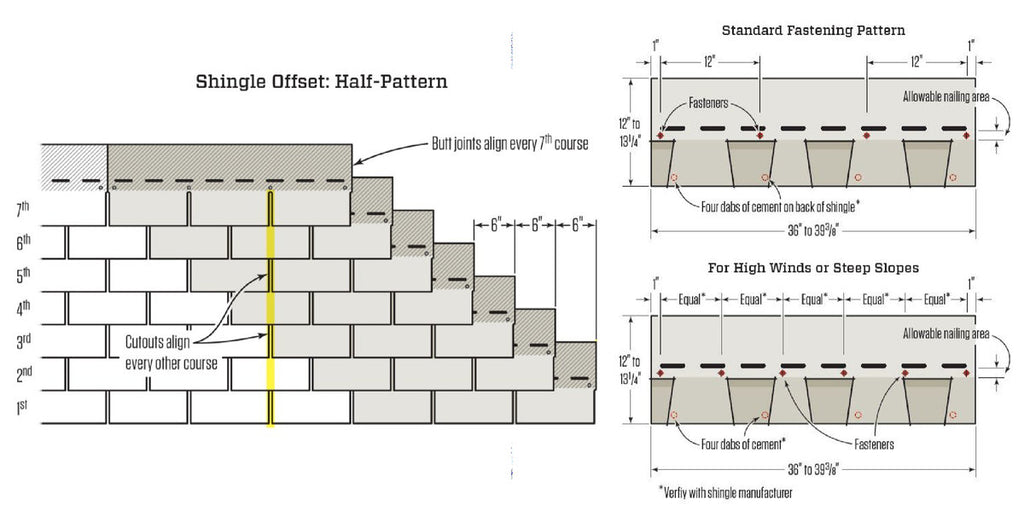
Roof Shingle LayOut and Nailing Patterns GutterBrush

How to Shingle a Shed With 3 Tab and Architectural Shingles

The standard nailing for asphalt shingles is a fournail pattern, with

Nailing Pattern For Architectural Shingles Nail Ftempo

Roof Shingle LayOut and Nailing Patterns GutterBrush

Architectural Shingle Nailing Pattern The Architect

Nailing Pattern For Architectural Shingles Nail Ftempo

Nailing Pattern For Architectural Shingles Nail Ftempo
This Strip Should Be 1.25 Inches Wide.
Do Not Place Fasteners On Or Above The Paint Line Of The Shingle.
Many Manufacturers Recommend A Modified Pyramid Pattern Where The Offsets Between Shingles Aren’t Equal Measurements But Random Themselves.
Web Roof Shingle Fastening Patterns Affect The Roof's Wind Performance And Roof Leakage.
Related Post: